
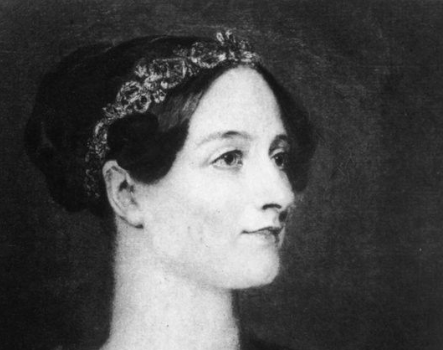
In 1843, Ada Lovelace published notes containing the first algorithm intended for a computing machine. But her true contribution goes deeper: she established the philosophical foundations of programming itself, recognizing that machines could follow abstract logical rules to solve problems far beyond simple calculation. Ada Lovelace was the first programmer because she was the first to understand what programming actually is—the translation of human reasoning into mechanical steps a machine can execute.
Who Was Ada Lovelace and What Did She See That Others Missed?
Ada Lovelace (1815–1852) was born to an unusual family: poet Lord Byron and mathematician Annabella Milbanke. Her mother, determined to protect Ada from Byron’s “poetical madness,” gave her a rigorous mathematical education—rare for girls of her era.
Ada didn’t see math and poetry as opposites. She called herself a “poetical scientist,” genuinely believing that the deepest understanding came from combining logical analysis with imaginative insight. She viewed mathematics not as calculation, but as a language for expressing abstract ideas.
At age seventeen in 1833, Ada attended Charles Babbage’s demonstration of the Difference Engine, a specialized mechanical calculator. While others saw an impressive but limited machine, Ada grasped something revolutionary: the potential for reprogrammable machines. Around 1834, Babbage began serious work on the Analytical Engine—far more general than the Difference Engine because it could be reprogrammed to solve entirely different problems, just as the Jacquard loom used punched cards to weave different patterns.
What made Ada’s insight unique: – She understood reprogrammability, not just calculation – She grasped that instructions (not mechanical design) determined what the machine could do – She recognized that the same logical procedure could solve infinite variations of a problem – She saw that algorithms transcended any specific machine or problem
How Ada Invented Programming Philosophy
In the early 1840s, Ada translated Luigi Menabrea’s article on the Analytical Engine from French into English. The translation request—whether from Babbage, Charles Wheatstone, or Ada’s own initiative—became something far larger. Her annotations grew to approximately 2.5 to 3 times the original text length.
But these weren’t mere explanations; they were philosophical statements about what programming actually is. Ada articulated the crucial distinction between calculation and reasoning.
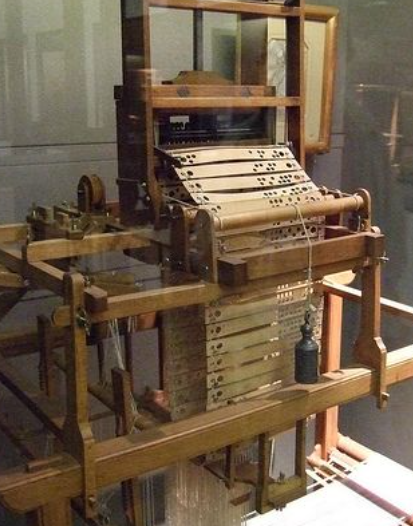
A calculator follows mechanical rules with no decisions. The Analytical Engine could: – Make conditional decisions (if-then logic) – Repeat instructions based on conditions (loops) – Work with abstract symbols, not fixed numbers
This meant the Analytical Engine could reason—it could respond differently to different inputs, adapt its process based on intermediate results, and handle entire classes of problems. Ada explained this by comparing the machine to the Jacquard loom: “The Analytical Engine weaves algebraical patterns just as the Jacquard loom weaves flowers and leaves.”
What Ada accomplished in her notes: 1. Decomposed abstract problems into mechanical steps that follow logical rules 2. Explained programming in philosophical terms, using poetry, music, and textile analogies 3. Proved that algorithms work across all specific instances and machines 4. Visualized invisible processes through diagrams showing data flow 5. Distinguished the algorithm from the machine executing it 6. Created step-by-step execution traces with verification at each stage (ancestor of modern testing and debugging)
The Algorithm: Ada’s Revolutionary Achievement and Its Complexities
Ada’s most famous contribution is her algorithm for computing Bernoulli numbers—a sophisticated mathematical sequence. Despite being written for a machine that never existed, it looks like modern pseudocode.
Her algorithm included: – Named variables (quantities holding data) – Loops (sections repeating under certain conditions) – Conditional branching (operations executing only when conditions are met) – Step-by-step execution traces showing what happens at each stage – Clear diagrams of data flow and variable states
This proved three revolutionary things: 1. Complex problems can be broken into universal, repeatable steps—no intuition required, just systematic procedures 2. The algorithm, not the machine, is central to computing—the same logical sequence works on different hardware 3. Programming is a distinct discipline—neither pure mathematics nor mechanical engineering, but a unique way of thinking about transformation and process
Important historical context: Historian Allan Bromley documented that the algorithm contains at least one known error. Scholars including Bromley and Bruce Collier have argued that Babbage developed significant portions of the algorithms, with Ada’s role being more collaborative and editorial than sole authorship. The honest assessment: Ada published the first algorithm for a computing machine with philosophical explanation. But acknowledging the scholarly debate about her independent contribution versus collaboration with Babbage strengthens rather than weakens her reputation.
What Ada Actually Believed About Machines and Thinking
One of Ada’s most misunderstood contributions is her philosophical position on machine intelligence. Some claim Ada believed machines could “eventually be taught to think.” She explicitly rejected this idea.
In her notes, Ada wrote: “The Analytical Engine has no power of originating anything. It can do whatever we know how to order it to perform.”
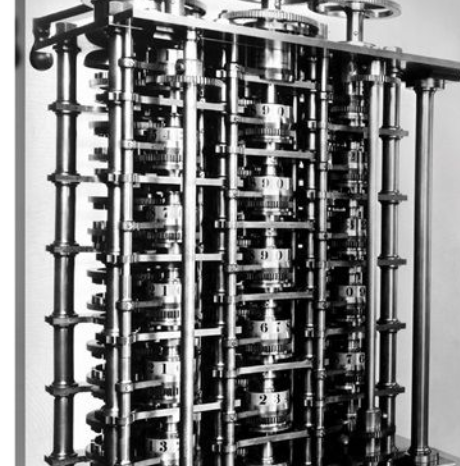
This statement—now called the “Lovelace Objection”—directly challenged the idea that machines could generate novel insights. This distinction is crucial: – Machines execute reasoning once humans make it explicit (programming) – Machines cannot originate reasoning or generate novel thought – Mechanizing thought requires humans to first make their thinking explicit enough to write as rules
Ada understood that thinking has a structure, and once that structure becomes explicit, it can be mechanized. But the original insight must come from human minds. This insight remains the core distinction in modern computing: humans create algorithms; machines execute them faithfully.
Why Ada Lovelace’s Legacy Still Powers Computing Today
Ada’s direct influence on modern computing is concrete and ongoing:
Alan Turing’s foundational work: In his landmark 1950 paper Computing Machinery and Intelligence, Turing explicitly discusses “Lady Lovelace’s Objection”—her claim that machines cannot originate thinking. Turing’s entire paper partly responds to Ada, making her the foundational voice in artificial intelligence philosophy.
The Ada programming language: The U.S. Department of Defense named its official programming language Ada in 1980 to honor her pioneering work—one of the most direct institutional tributes to any historical figure in computing.
Her complete contributions: Most discussions focus only on Note G (the Bernoulli algorithm), but Notes A through F contain substantial philosophical content about the engine’s operations on algebraic symbols, discussions of music composition, and the machine-origins claim. Treating only Note G understates the scope of her intellectual work.
The social and intellectual networks often erased: Ada was introduced to Babbage through Mary Somerville, a major scientific figure and Ada’s mentor. This context—the professional networks that made Ada’s work possible—is crucial to understanding her achievement.
Ada Lovelace Day: An annual international celebration of women in STEM, established to honor her and encourage women in science and technology fields.
When you write code today, you inherit Ada’s vision: decomposing problems into explicit mechanical steps, expressing those steps in notation machines understand, and trusting machines to execute them faithfully. Every programming language, framework, and piece of software since has been an elaboration on her core insight. The Analytical Engine was never built during her lifetime, yet nearly 200 years later, her notes describe—with perfect clarity—the foundations of programming itself: loops, variables, conditional logic, and abstraction levels.
Her legacy isn’t simply that she wrote the first algorithm. It’s that she figured out what programming is at its most fundamental level. She understood that computation is about manipulating symbols according to rules, and that once you make thinking explicit enough to write as rules, those rules can be executed by a machine. That insight—that thinking, when made explicit, can be mechanized—changed everything.
Leave a Reply